Paint correction is the most misunderstood service in detailing. Here’s what it really is, what it removes, and how to know if your car needs it before you book a coating.
Paint correction is the most misunderstood service in car detailing. It’s not waxing. It’s not polishing in the casual sense. And it definitely isn’t ceramic coating. Here’s what it actually is, when you need it, and when you don’t.
The simple version
Paint correction is the controlled removal of a tiny amount of clear coat to physically eliminate swirl marks, scratches, water spots, and oxidation. A professional uses a machine polisher with progressively finer pads and compounds to "level" the clear coat back to a smooth, clear, reflective surface.
It's not adding anything. It's taking damage off.
What paint correction removes
- Swirl marks (the spider-web pattern from improper washing or drive-thru washes)
- Light scratches that don’t catch a fingernail
- Holograms and buffer trails from previous bad polishing
- Water spots that haven’t etched too deep
- Oxidation (the dull, chalky look on faded paint)
- Bird-strike etching, if caught early
What paint correction can't fix
- Deep scratches that catch a fingernail (those are through the clear coat)
- Rock chips (those are touch-up paint or PPF territory)
- Stone strike damage on the bumper
- Anything that has reached bare metal
The 1-stage vs multi-stage debate
A single-stage correction uses one polishing pass — typically a medium pad and a one-step polish. It removes 60–80% of defects and dramatically increases gloss. Most daily drivers don’t need more than this.
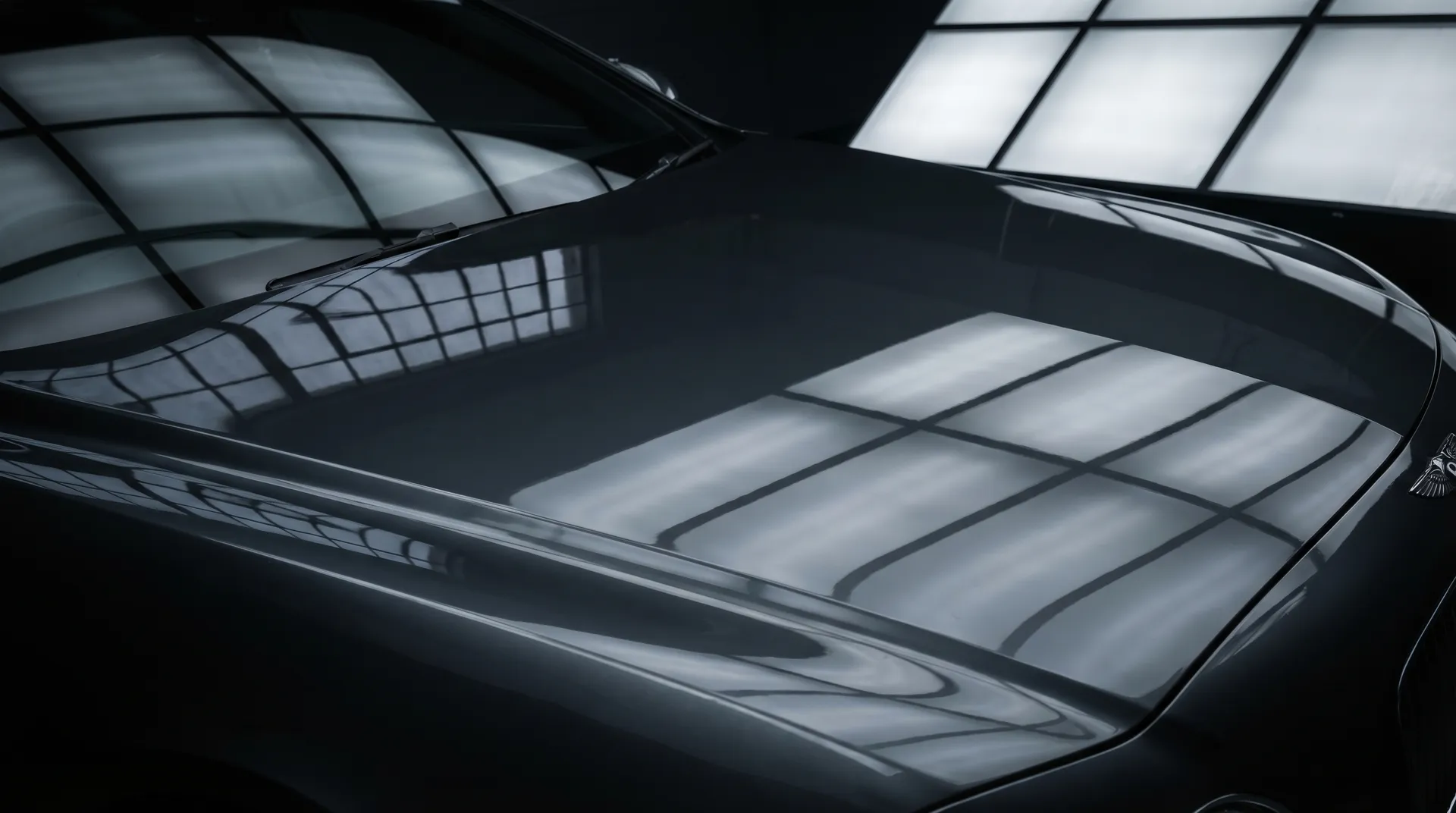
A multi-stage correction uses 2–4 passes with progressively finer combinations. It removes 90–99% of defects and produces the 'wet look' show finish. It's the right call for collector cars, show prep, or anyone preparing a car for ceramic coating where you want the protection to lock in a near-perfect finish.
When you need paint correction
- Before any ceramic coating or paint protection film install. Always.
- When you can see swirls in direct sunlight — that’s the test.
- On a car you’ve owned for 3+ years that has never been corrected.
- On a used car you just bought. You inherited the previous owner’s washing habits.
- Before selling — paint correction often pays for itself in resale.
When you don't
- On a brand new car off the lot. (Wait — most new cars actually NEED a one-stage correction. Dealer prep is rough on clear coat.)
- If you have ceramic coating that’s less than a year old.
- On a beater you’re not keeping.
How often?
A proper paint correction is a one-time investment for most cars, not a recurring service. Done right, it should last years. The point of pairing it with ceramic coating or PPF is to lock the finish in so you don’t need to keep correcting.
Get your paint corrected at Hotel X
Multi-stage correction in our climate-controlled bay. Paint thickness measured before any cut. Show-finish results, photographed in the same lighting before and after.
Get your paint corrected at Hotel X detailsGet the next guide first
Honest detailing tips, occasional package offers, no spam. Unsubscribe in one click.