Leather in luxury cars cracks and fades faster than most owners expect. Here’s what actually prevents it, what destroys it, and what to ignore.
Leather in a luxury car is one of the first things that shows age. Driver's seat bolsters crack, the bottom cushion gets a sheen, the color fades to a dusty grey. And it happens faster than people think — we see 4-year-old cars with leather that looks 10. Here’s what actually preserves it, and what kills it.
Why leather dries out in Toronto
Toronto is rough on leather in both directions. Summer: cars parked in the sun hit 60°C inside, and UV through the windows bakes the oils out of the leather. Winter: heated seats on full blast every day, combined with dry indoor air from the HVAC, pulls moisture out at the same rate. Most cars here get hit with both extremes in the same year.
Real leather vs coated leather
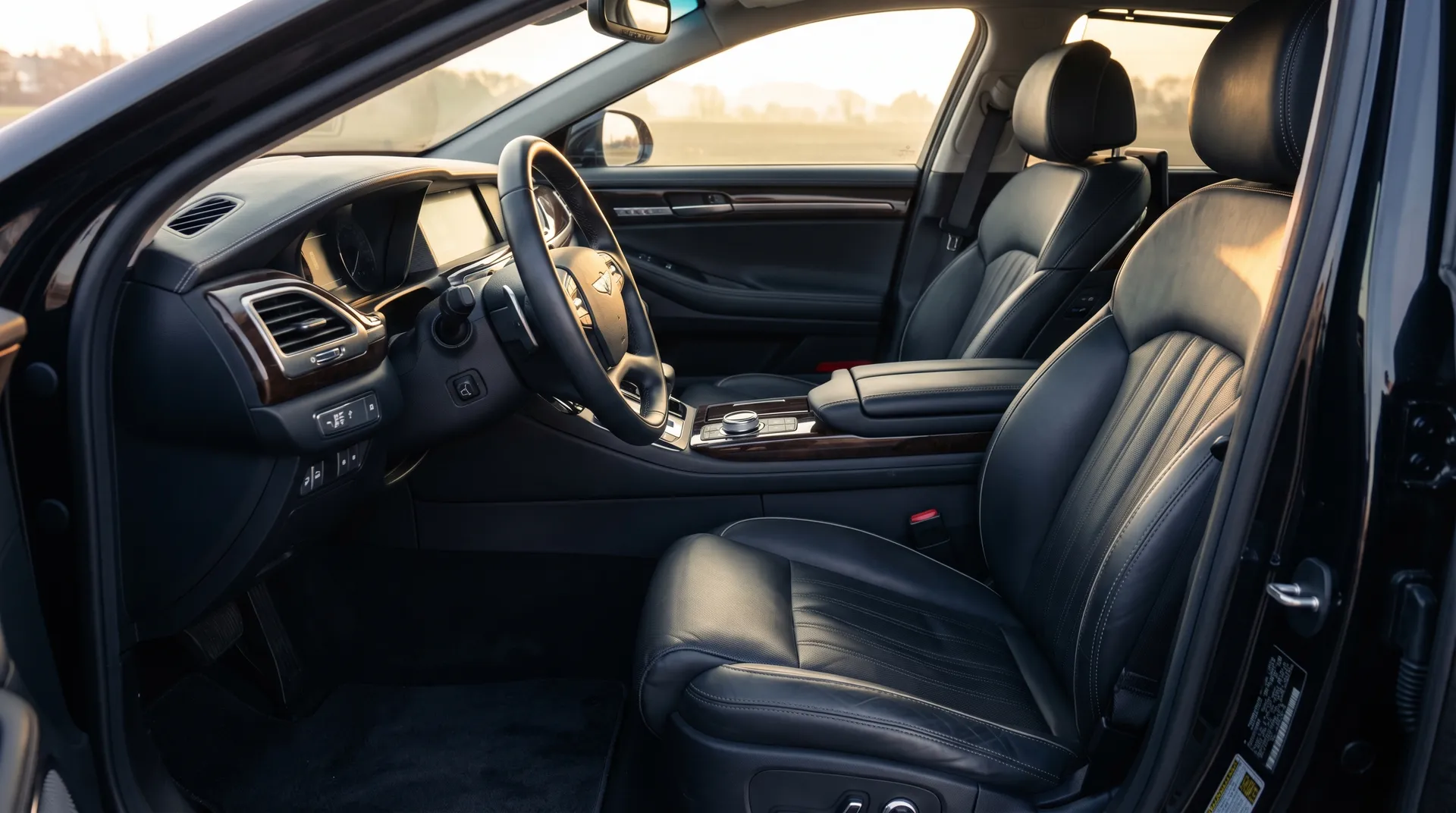
Most modern "leather" seats are coated leather — the hide is finished with a pigmented polyurethane top layer. That coating is what you actually see and touch, not the leather itself. This matters because the coating is what cracks first, not the hide underneath. Once it cracks, moisturizing the leather doesn’t fix the visible damage — the coating is already gone.
A small number of ultra-luxury cars (Range Rover, some Bentley, some Rolls) use semi-aniline leather, which is finished but more porous. These actually do benefit from traditional leather conditioner. Most other cars don’t — they need a coating-safe leather cleaner and a light protectant, not heavy "conditioner" that sits on the surface.
The 3-month rule
Clean and protect your leather every 3 months. Not every year. Not 'when it looks dirty.' Every 3 months. Between cleanings, oils from your skin, denim dye from jeans, and micro-abrasion from sliding in and out wear down the coating. Regular low-effort maintenance is what prevents the cracks. Heavy annual deep cleans do not.
How to clean leather without damaging it
- Use a pH-neutral leather cleaner designed for automotive coated leather
- Apply with a soft microfiber, never a brush on the main seat surface
- A horsehair brush is OK on heavily soiled bolsters — gentle, doesn’t scratch
- Wipe residue off immediately — never let cleaner dry on the surface
- Follow with a water-based leather protectant, not an oil-based dressing
What NOT to use on your leather
- ArmorAll or similar vinyl dressings — silicone-based, leaves a greasy sheen, attracts dust
- Baby wipes — alcohol and perfume dry the leather out
- Dish soap — strips the coating oils
- Saddle soap — made for saddle tack, way too aggressive for automotive coated leather
- Magic Erasers — they’re abrasive, they’ll strip the pigment off
- Olive oil, coconut oil, "home remedies" — they go rancid and stain
Professional leather treatment vs DIY
A professional leather service uses a steam cleaner to safely lift dirt from pores without soaking the leather, followed by a coating-safe cleaner, then a water-based protectant, and often a leather ceramic coating on high-wear areas. DIY is fine for 3-month maintenance — professional treatment is what you book when the seats look tired and you want to reset them.
When to bring it in for steam cleaning
- When you can see dirt in the leather pores that wipe-cleaning doesn't remove
- When there’s denim dye transfer on cream or tan leather
- When the driver’s bolster is starting to get shiny and dark
- Before selling the car (it’s one of the biggest resale levers)
Professional leather service
Steam clean, coating-safe cleaner, and a leather ceramic on high-wear zones. Done in our Hotel X bay in a few hours.
Professional leather service detailsGet the next guide first
Honest detailing tips, occasional package offers, no spam. Unsubscribe in one click.