Both protect your paint. They protect against very different things. Here’s the honest breakdown of when to use PPF, when to use ceramic, and when to use both.
Anyone shopping for paint protection in Toronto runs into the same question: PPF or ceramic? The honest answer is they're solving different problems, and the smartest owners use both. Here's how to decide what your car actually needs.
What ceramic coating actually does
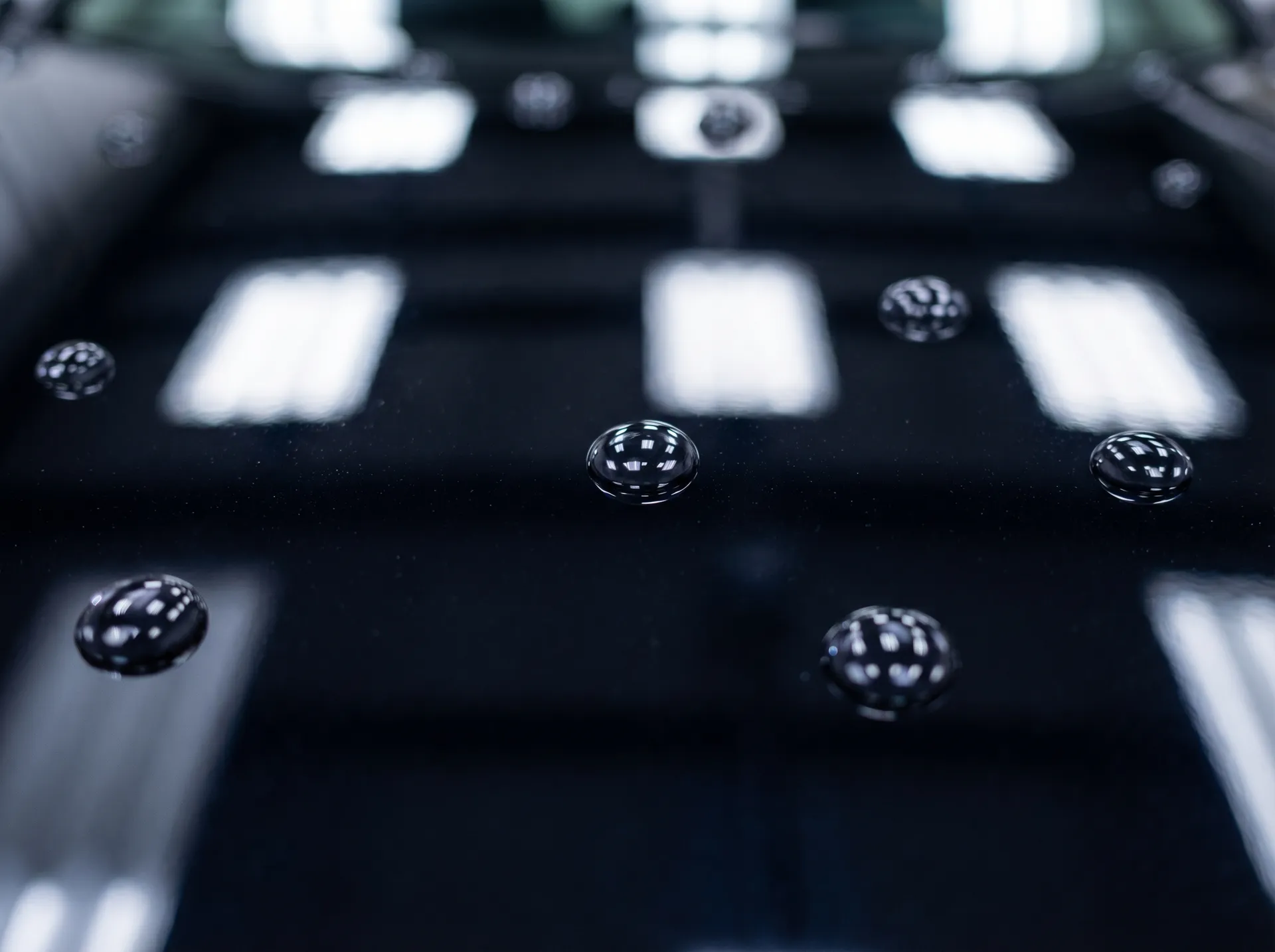
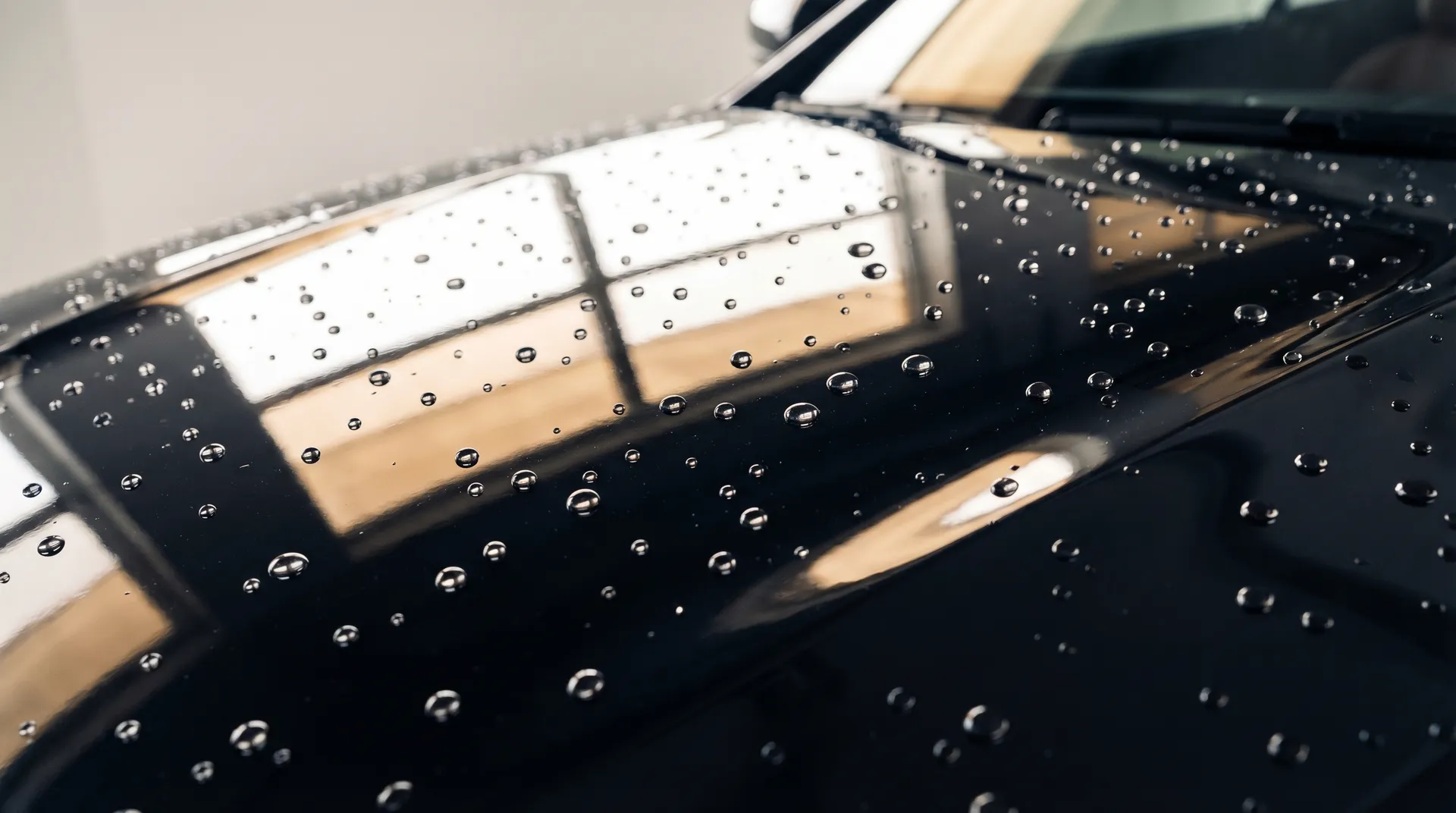
Ceramic coating is a thin, hardened glass-like layer that bonds chemically to your clear coat. It makes the paint hydrophobic (water beads instead of soaking in), easier to wash, more UV-resistant, and noticeably glossier. It’s a chemistry play.
What ceramic coating does NOT do: stop a rock chip. Stop a key scratch. Stop a shopping cart. Stop salt from etching your paint over a Toronto winter. It’s protection against contamination, not impact.
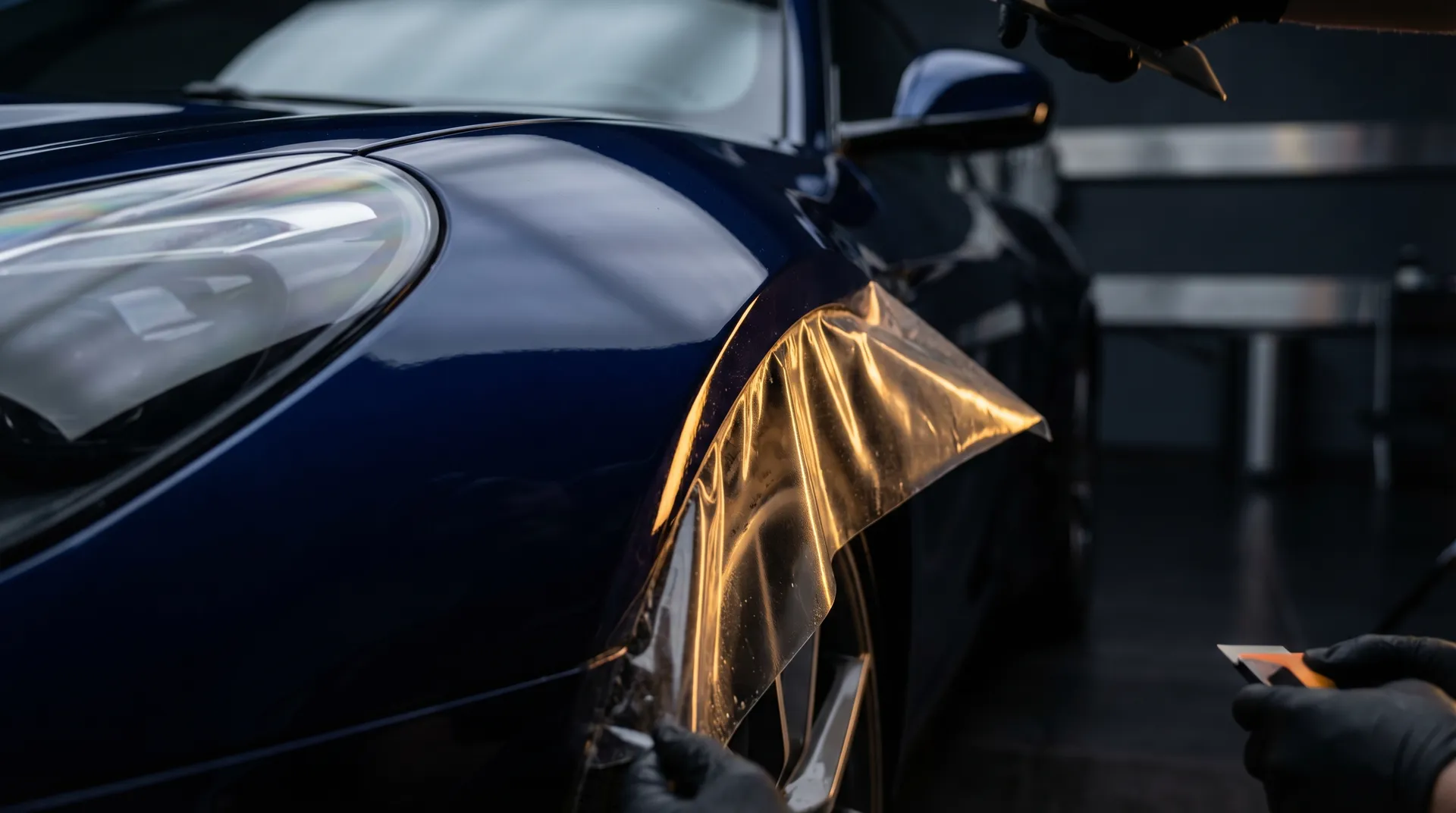
What paint protection film (PPF) actually does
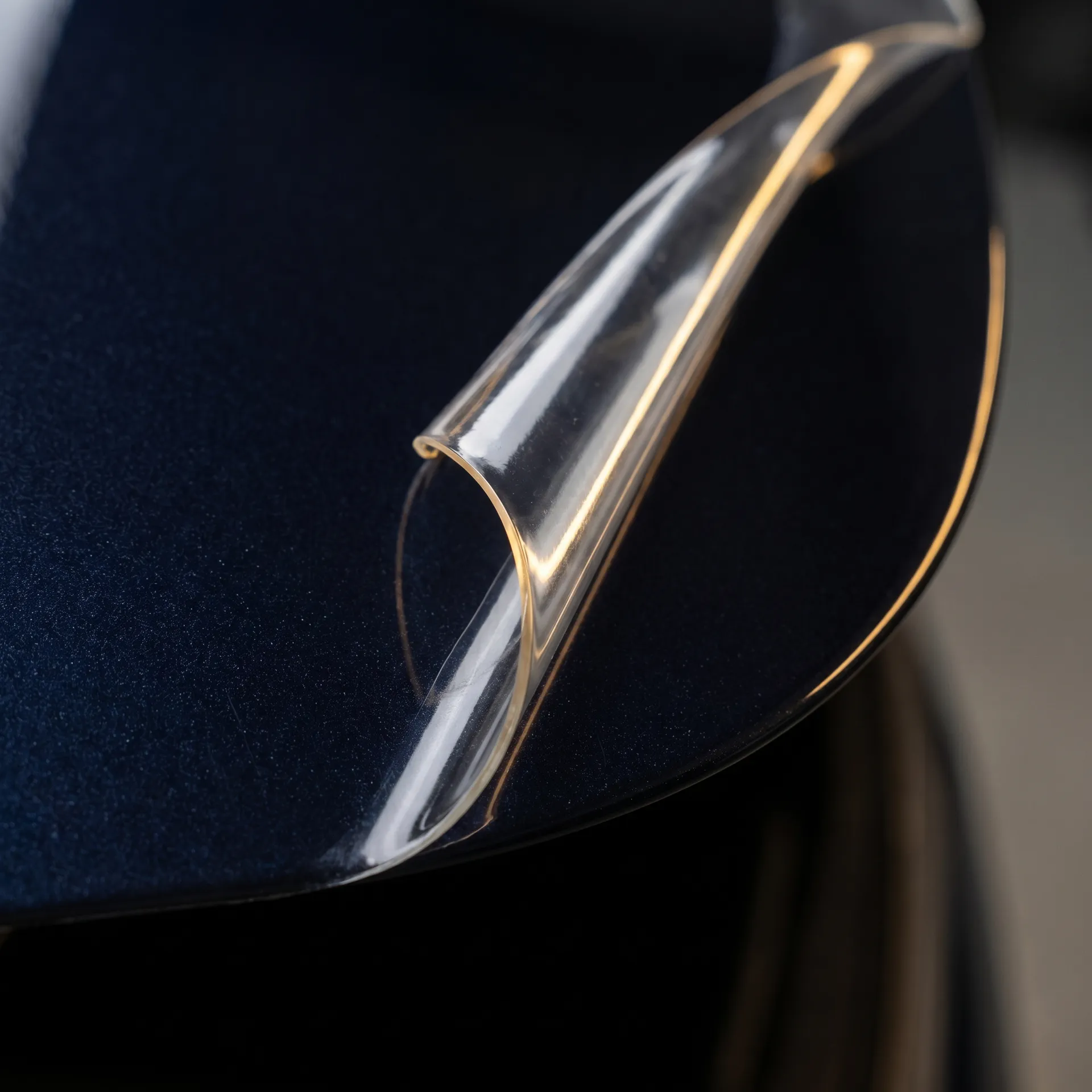
PPF (also called clear bra or clear wrap) is a thick, transparent urethane film cut and heat-fitted to your panels. It’s a physical barrier — anywhere from 6 to 10 mils thick. Modern PPF self-heals: light scratches and swirl marks disappear when exposed to heat (a hot day or warm water).
PPF stops rock chips. It stops bug strike damage. It absorbs door dings. It stops the kind of road rash that ages a luxury car prematurely. It's protection against impact, not just chemistry.
Side-by-side: what wins on each problem
- Rock chips on the highway: PPF, by a mile. Ceramic does nothing here.
- Hydrophobic water beading: ceramic. PPF can be coated, but ceramic does this natively.
- Bird droppings and tree sap: ceramic — easier to wipe off a coated surface before it etches.
- Light scratches that heal in the sun: PPF (if it has self-healing top coat).
- UV fade on a parked car: both help, but ceramic blocks more UV by design.
- Salt and winter road grime: both. Ceramic makes it slide off; PPF stops the salt from contacting bare paint at all.
- Cost per square foot: ceramic is cheaper to apply over the whole car; PPF is more expensive but you can target it (front clip only, etc.).
The right answer for most cars
For a daily-driven luxury car in downtown Toronto, the smart move is targeted PPF on impact zones (front bumper, hood, fenders, mirror caps, rocker panels) and ceramic coating over everything — the PPF and the unwrapped panels. The PPF stops the chips. The ceramic gives you the gloss, the easy washing, and the contamination protection across the whole car.
When you should skip one
- Garage queen / show car: ceramic only is usually enough. You’re not collecting rock chips at 3 mph.
- Brand-new luxury car you plan to keep 10+ years: full body PPF is worth it. Add ceramic on top.
- Older car with existing chips and swirls: paint correction first, then your call on PPF or ceramic.
Not sure what you need?
We’ll walk through your car, your driving, and your budget — and tell you what would actually be worth it. No sales pitch.
Not sure what you need? detailsGet the next guide first
Honest detailing tips, occasional package offers, no spam. Unsubscribe in one click.